

 Home
HomeWindows as a Key Element of Buildings’ Environmental Footprint
Every building—whether a new build or a renovation—leaves a carbon footprint. From a carbon-footprint perspective, windows can seem complicated:
- on the one hand, their production consumes resources,
- on the other hand, they can significantly influence a building’s energy consumption.
So what is more sustainable?
Plastic, aluminum, or wooden windows? And is it better to build new homes or renovate older ones? We aim to outline the answers in this article.
If you need advice from experts, get in touch with us and we will arrange a meeting in our showroom.
How Does the Window Material Affect the Carbon Footprint?
A carbon footprint includes a product’s environmental impact throughout its entire life cycle—from sourcing materials to disposal. To understand why sustainability matters in window manufacturing, we must look at the full life cycle of windows. It consists of 4 phases:
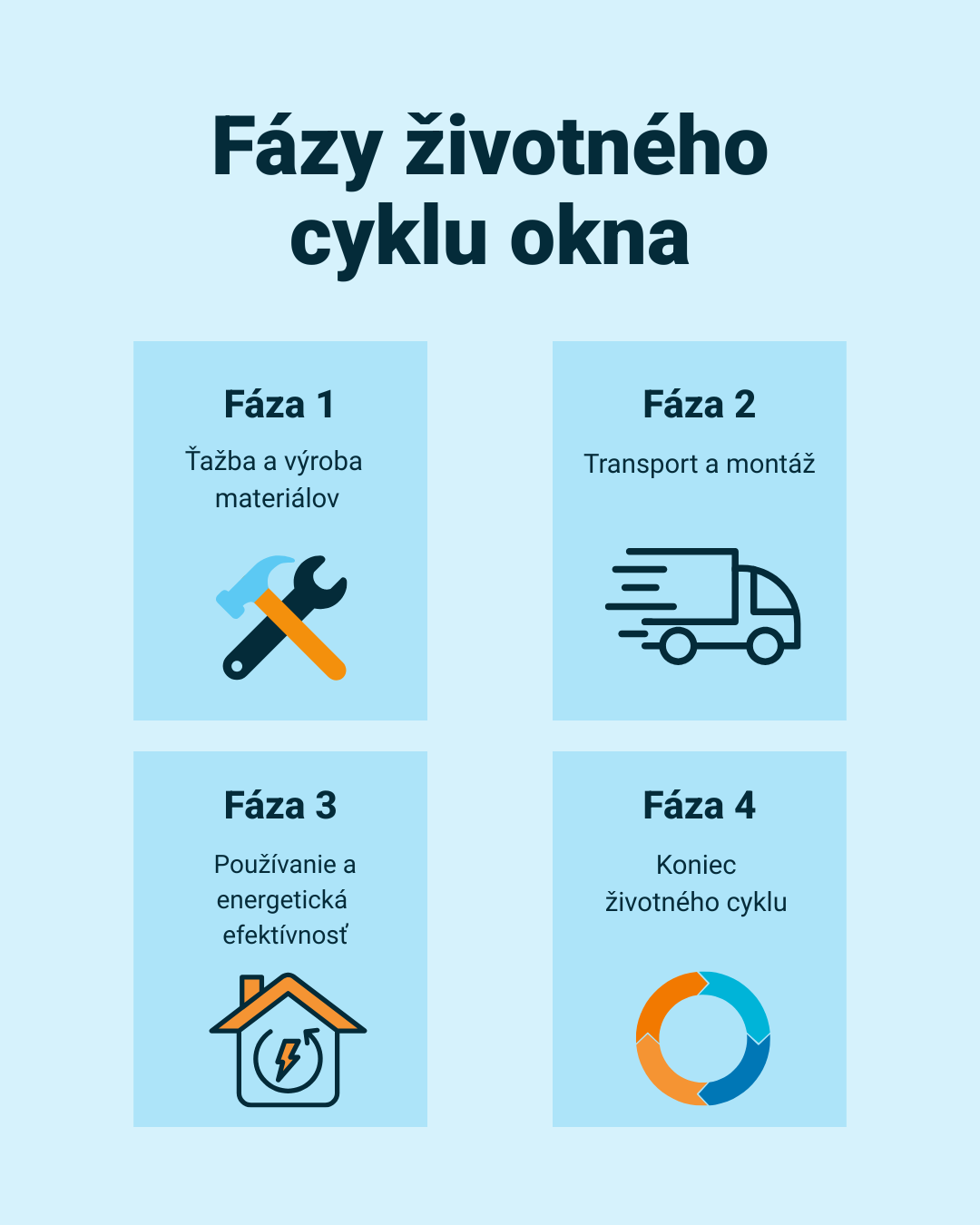
Phase 1: Extraction and Production of Materials
PVC (plastic windows): made from petroleum-based products, which means high CO₂ emissions already during production.
Wooden windows: if the wood comes from sustainably managed forests (FSC certification), it has a lower carbon footprint.
Aluminum windows: bauxite mining and aluminum processing are very energy-intensive—the production carbon footprint is the highest of all three materials. On the other hand, aluminum that has already been mined and processed can be recycled indefinitely without losing its properties. This makes it a favorite among recycled materials.
Phase 2: Transport and Installation
Local production and shorter transport distances = lower CO₂ emissions.
Phase 3: Use and Energy Efficiency
The greatest environmental benefit of windows is their ability to save energy for heating and cooling.
Triple glazing and low-emissivity coatings can reduce a building’s energy consumption by up to 30–50%, thereby helping reduce the window’s overall carbon footprint.
Phase 4: End of Life Cycle – Recycling and Disposal
Rigid PVC from window frames can be recycled up to 7 times without loss of quality.
Recycled PVC is often layered into the core of profiles, while the outer part remains made of new material.
Wooden windows are biodegradable or can be burned with a minimal environmental footprint.
Aluminum windows have the advantage of full recyclability.
Why Does PVC Have a High Carbon Footprint?
PVC (polyvinyl chloride) is a plastic material whose production is energy-intensive and dependent on fossil fuels. PVC’s carbon footprint can be broken down into several key aspects:
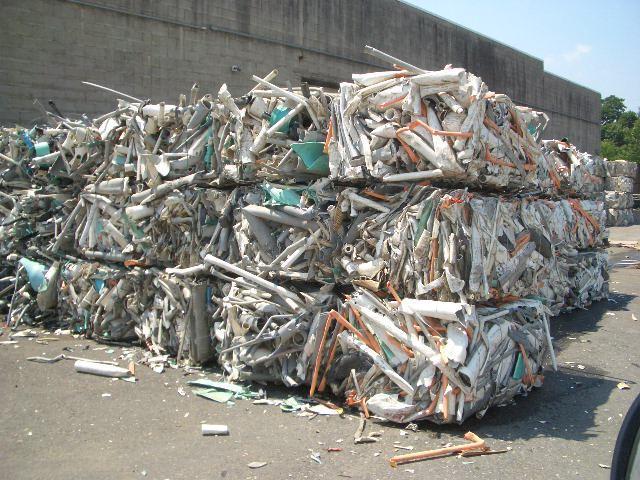
Raw materials: PVC is based on oil and natural gas
- PVC is made from ethylene (obtained from oil or natural gas) and chlorine (obtained through electrolytic processing of salt).
- Oil and natural gas extraction is environmentally harmful—not only due to high CO₂ emissions, but also due to deforestation and water and soil pollution.
- Manufacturing process: High energy demand
Electrolytic production of chlorine (one of the basic components of PVC) is very energy-intensive and requires large amounts of electricity. CO₂ emissions from PVC production are higher than those from producing wood or recycled aluminum. PVC contains various additives and stabilizers (heavy metals, phthalates, flame retardants), which have an additional environmental impact. - Limited number of recycling cycles
Although PVC is among the most recyclable plastics, its life cycle is not infinite. The material can withstand multiple recycling cycles—often cited as up to 7—but its properties change over time.
What Happens in Each Cycle?
With each processing of PVC:
- the polymer chains are disrupted (so-called degradation),
- oxidation or yellowing of the material may occur,
- small microscopic impurities or additive residues form that can no longer be fully separated.
- even though stabilizers are typically added to PVC during recycling to preserve its properties, after a certain number of cycles it simply stops working at the required quality level (especially if the final product must be resistant to UV radiation, frost, or mechanical stress).
And What About PVC That Can No Longer Be Recycled?
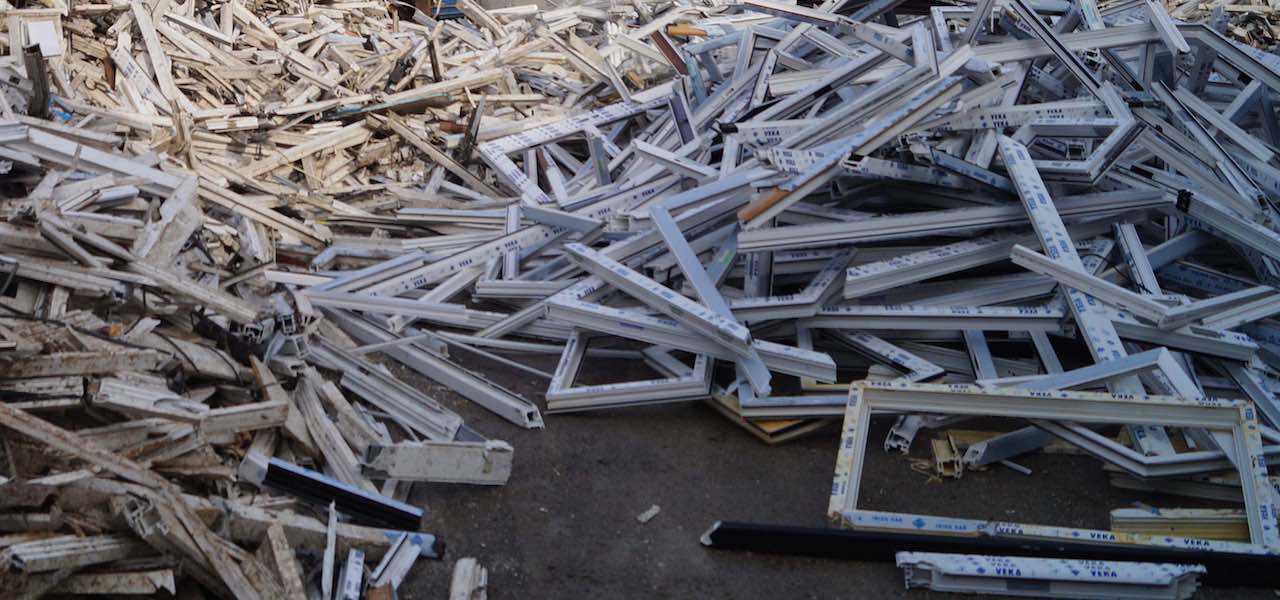
When PVC is no longer suitable for further recycling:
It is mechanically shredded and used as a filler in less demanding products (e.g., garden edging, industrial flooring, pallets).
If it cannot be used even this way, the next step is:
- Energy recovery—i.e., controlled incineration in facilities that can filter out the harmful substances produced (e.g., hydrogen chloride).
- Landfilling—the least preferred method, which is being gradually restricted in the EU.
A Contrast with Aluminum
- Aluminum can be recycled indefinitely without loss of quality.
- Recycling aluminum requires only 5% of the energy compared to producing new aluminum.
“More Eco-Friendly” PVC
Nevertheless, SCHÜCO is looking for solutions to mitigate the environmental impact of PVC profiles. SCHÜCO PVC profiles are part of the VinylPlus program, which ensures efficient recycling of this plastic. Recycled material is used in profile production. Using recycled PVC reduces CO₂ emissions and contributes to the circular economy. These profiles offer the same insulating properties as non-recycled PVC, while reducing the burden on the environment.
Aluminum can be recycled indefinitely without loss of quality. Recycling aluminum requires only 5% of the energy compared to producing new aluminum.
More about SCHÜCO recycled solutions in this article
Does Wood Still Have an Environmental Advantage Over Aluminum?
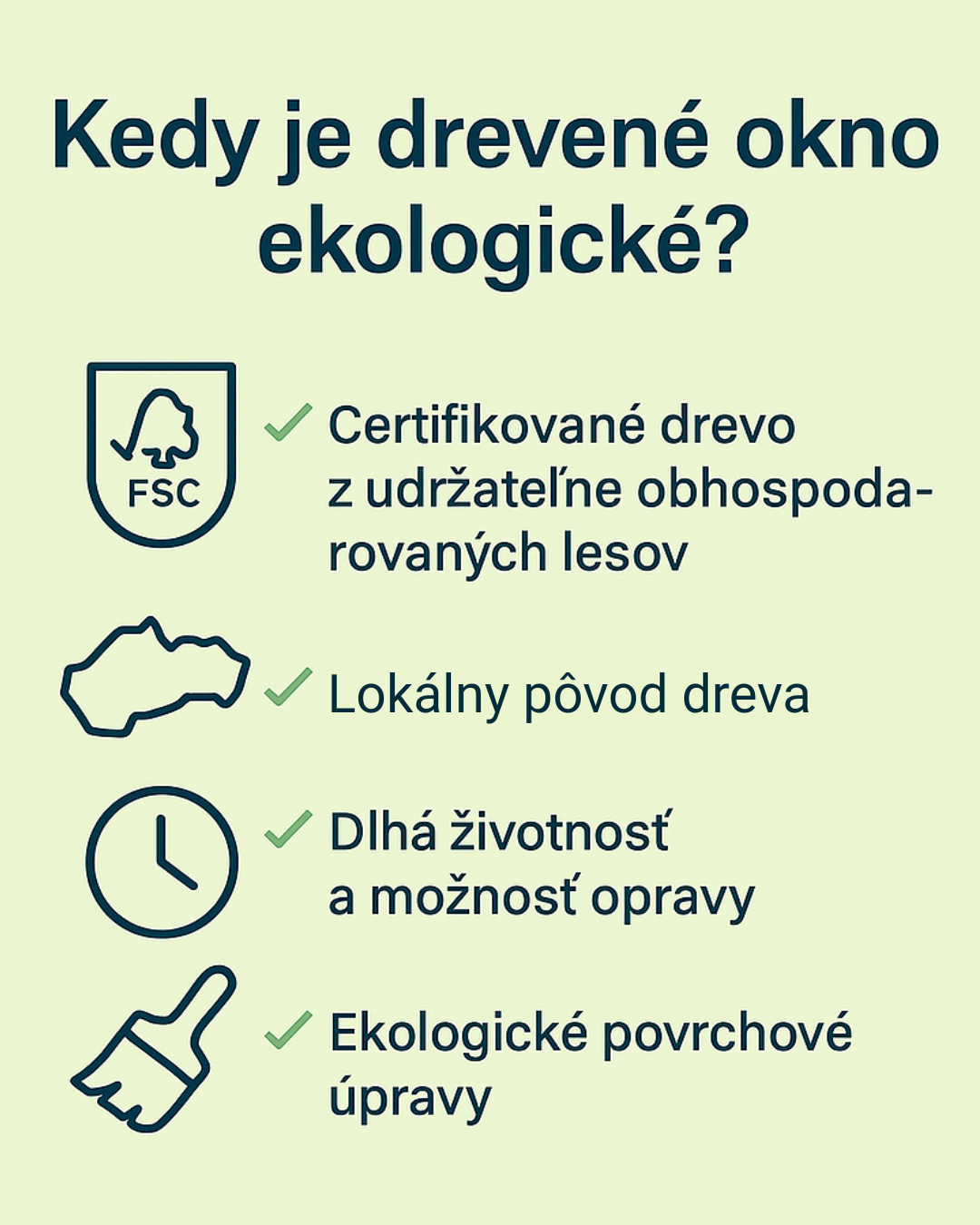
- For a wooden window to be truly eco-friendly, it should meet these criteria:
Certified wood from sustainably managed forests—primarily FSC (Forest Stewardship Council) or PEFC (Programme for the Endorsement of Forest Certification). - Local origin of the wood—to minimize the transport carbon footprint (importing exotic wood is not eco-friendly).
- Long service life and repairability—high-quality workmanship extends the lifespan of windows.
- Eco-friendly surface finishes—natural-based coatings (e.g., oils, waxes, water-based varnishes).
Are Wooden Windows in Slovakia Truly Eco-Friendly?
Not always! Many “wooden windows” may be:
- Made from uncertified wood (logging may be unsustainable).
- Treated with synthetic coatings that are not eco-friendly.
- Combined with plastic elements—thereby losing their eco-friendliness.
If you want truly eco-friendly wooden windows, you should ask about:
- FSC or PEFC certification.
- The origin of the wood—whether it comes from Slovakia or nearby countries.
- Eco-friendly surface finishes—e.g., natural oils instead of synthetic varnishes.
Why Can Recycled Aluminum Be More Eco-Friendly Than Wood?
Although wooden windows are often considered eco-friendly, aluminum windows made from recycled aluminum can have an even lower carbon footprint, because:
- They require no maintenance (coatings, impregnation)—wooden windows must be repainted regularly, which increases the environmental footprint.
- They have a longer service life—high-quality aluminum windows last longer than wooden windows.
- They are 100% recyclable—wood does decompose, but manufacturing wooden windows often generates a significant amount of waste.
Are Aluminum Windows Really Eco-Friendly? Facts and Myths
Aluminum has several key advantages over wood:
- Weather resistance—it does not warp, crack, or rot.
- Virtually maintenance-free—wood needs coatings and impregnation; aluminum does not.
- 100% recyclability—aluminum can be remelted indefinitely without loss of quality.
- Long service life
Myth: Aluminum Has a High Carbon Footprint
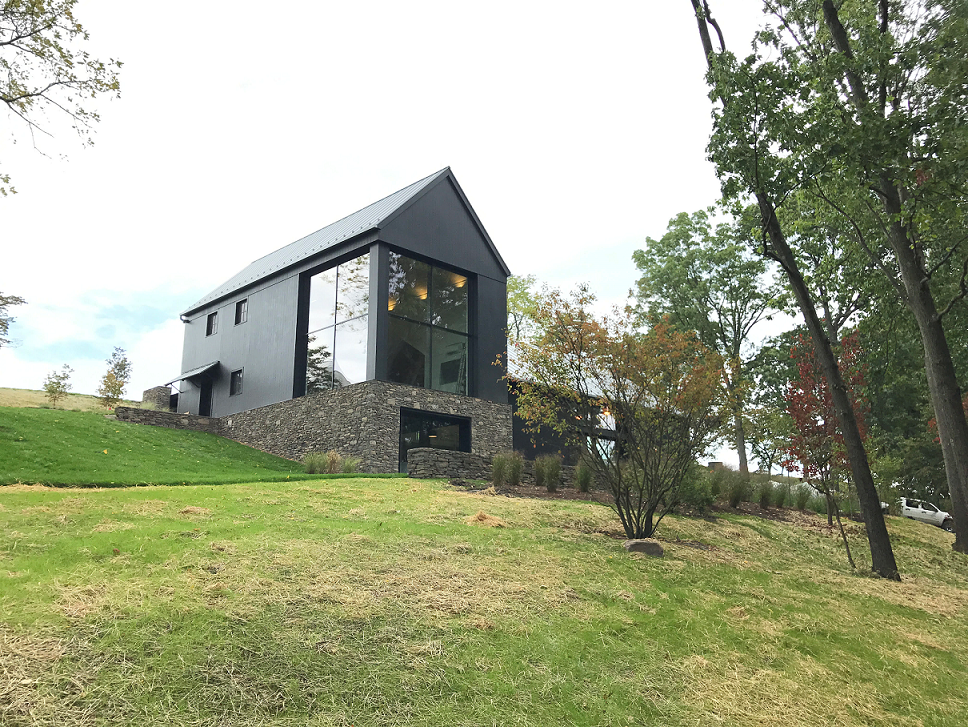
It is true that bauxite mining is demanding. BUT if recycled aluminum is used, energy consumption is reduced by up to 95% compared to producing new aluminum! Modern aluminum windows therefore have a lower environmental footprint than wood, if we focus on their life cycle and recyclability.
If recycled aluminum is used, energy consumption is reduced by up to 95% compared to producing new aluminum! Modern aluminum windows therefore have a lower environmental footprint than wood, if we focus on their life cycle and recyclability.
More about SCHÜCO recycled solutions in this article
Comparison: Plastic vs. Wood vs. Aluminum
What Does This Mean in Practice?
- PVC windows are an economical choice, but from a carbon-footprint perspective they represent a greater burden.
- Wooden windows are eco-friendly only under certain conditions—if the wood comes from sustainable sources, but they require maintenance and may deteriorate over time.
- Aluminum windows made from recycled aluminum offer the best combination of long-term sustainability, durability, and recyclability.
Insulation Performance vs. Environmental Footprint: How Are They Connected?
The better the insulation, the less energy is needed for heating and cooling. Modern windows have excellent insulation performance. Triple glazing, low-emissivity coatings, and high-quality seals can reduce heat loss by up to 50%.
Why Is This Important?
- Up to 40% of global energy consumption is related to buildings.
- If we reduce energy consumption for heating and cooling, we reduce CO₂ emissions.
- High-quality windows have a major impact on a building’s carbon footprint over its lifetime.
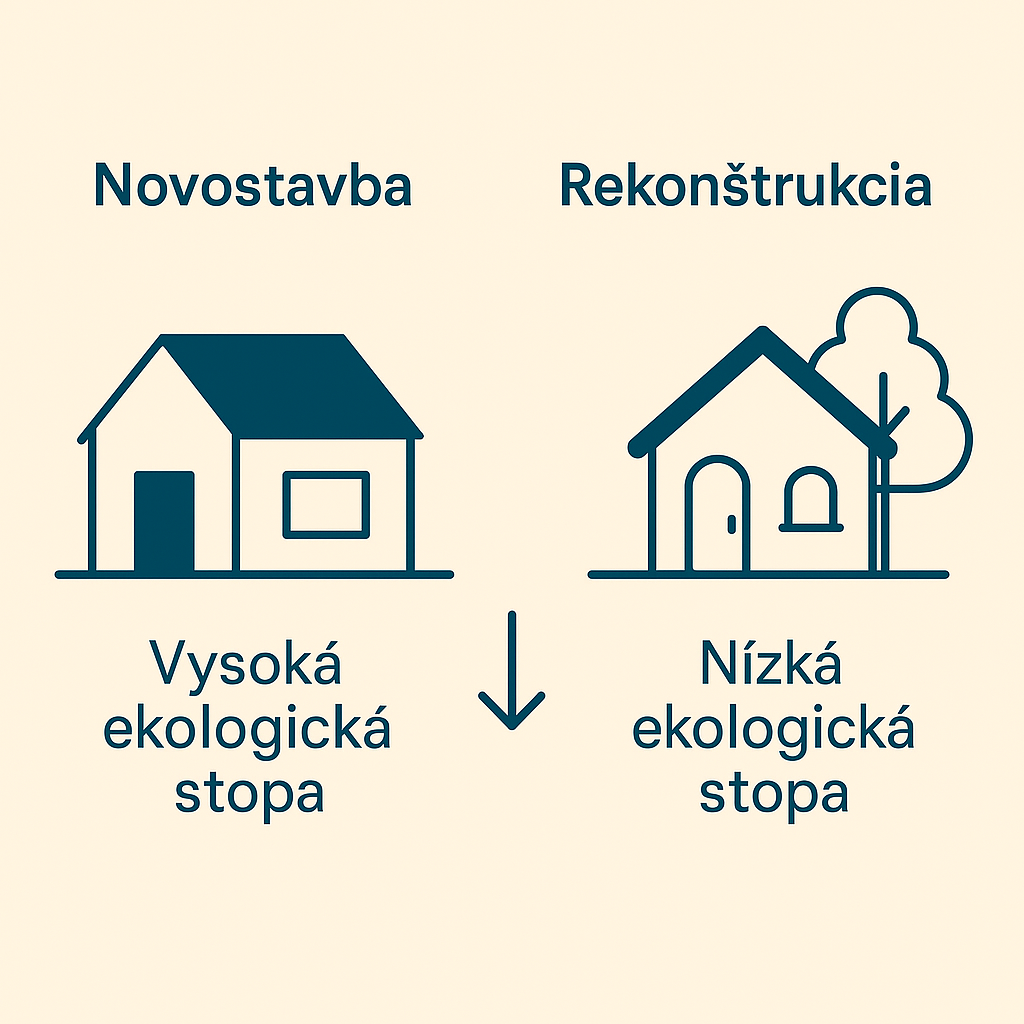
Which Is Better—Renovation or New Construction?
New construction (satellite towns and IBV)
- Building new homes places a burden on nature and takes up fertile land.
- New “satellite towns” often increase traffic (people commute to work), resulting in a higher carbon footprint.
- Rapid construction can increase the risk of using cheap materials with a shorter lifespan, and therefore a higher rate of waste in the future.
Renovation of Older Homes
- Preserving existing infrastructure = lower environmental burden.
- Many older homes have thick walls that provide natural insulation.
- Replacing windows in older buildings has a huge effect on energy savings—old windows often have heat losses of up to 30–40%.
Conclusion?
Whenever possible, it is always better to renovate than to build new homes. New construction should be well thought out and eco-friendly—using materials with a low carbon footprint.
Building new homes places a burden on nature and takes up fertile land.
A Philosophical Perspective: Where Are We Headed?
Does it make sense to save money on windows if it increases energy consumption?
What is the bigger problem—the high price of quality windows or the environmental burden of cheap solutions?
Do we want to live in a sustainable environment, or in cheap “temporary” solutions?
Does it make sense to save money on windows if it increases energy consumption?
Sustainability in window manufacturing is not only about materials, but about a broader understanding of our responsibility to the planet.
Conclusion: How to Choose Eco-Friendly Windows?
- Prefer materials with a low carbon footprint—FSC-certified wood, recycled aluminum.
- Consider the window’s entire life cycle, not only the price.
- If you have the option, renovate rather than build new homes.
- Choose windows with excellent insulation performance—you will save energy and reduce CO₂ emissions.
Looking for eco-friendly, sustainable windows that will last for decades? Contact us and find out how aluminum windows made from recycled aluminum can help you save both energy and money.

You might be interested in