

 Home
HomeWhat Does This Value Indicate? How much heat escapes through the insulating glass spacer frame
The lower the value, the better the insulation.
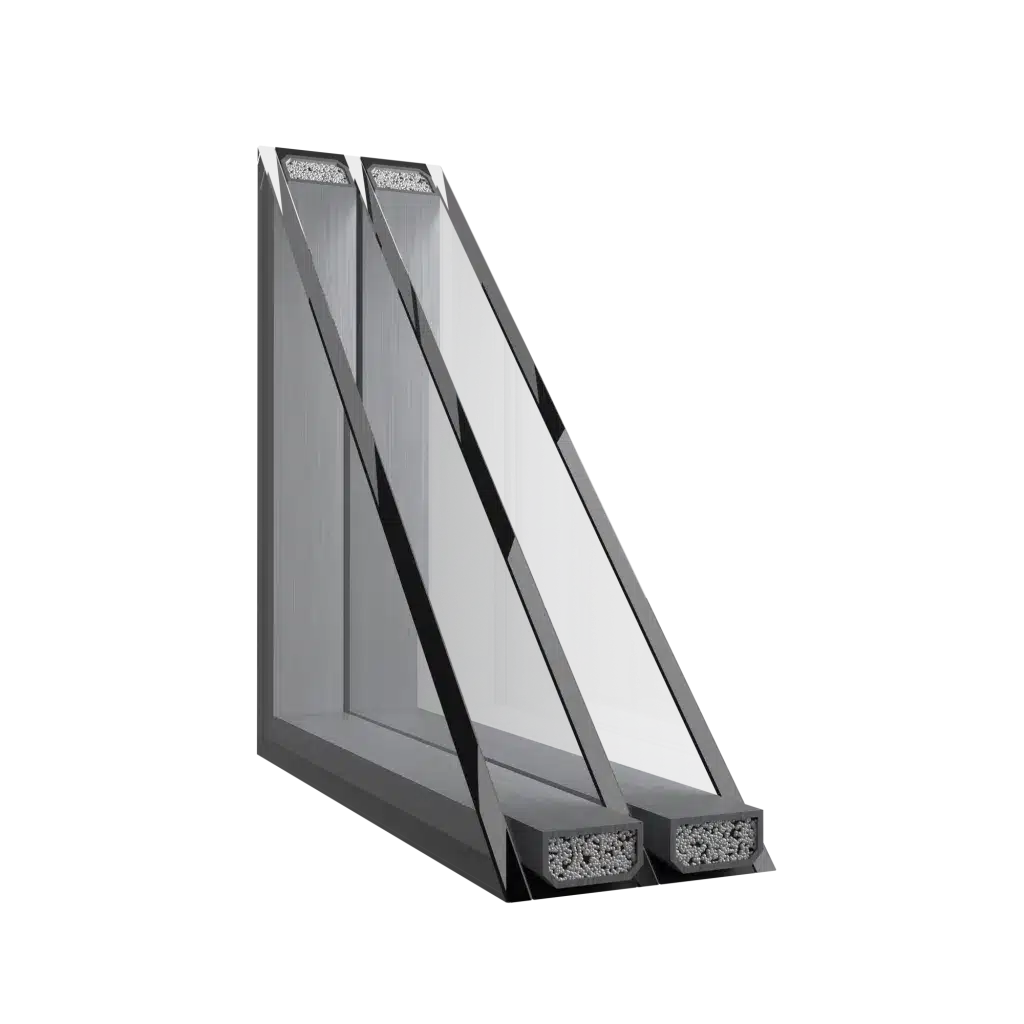
Ψg (Psi) is the linear heat transfer coefficient (thermal bridge) that expresses how much heat escapes through the perimeter boundary of the glass and frame (spacer frame) of insulating glass. A lower Ψg value means better thermal insulation and reduced heat loss at this critical point of the window, which improves the overall energy efficiency of the window.
Heat Transfer Coefficient (U-value)
Measures heat transfer across a surface (e.g., glass, frame).
Linear Heat Transfer Coefficient (Ψ-value)
Measures heat transfer along a line (e.g., frame-glass junction) where heat loss occurs.
Ψg
Specifically refers to heat transfer at the point where the spacer meets the edge of the glass.
Unit
Watt per meter Kelvin W/m·K
Significance
The spacer frame, which separates the glass panes, is often a thermal bridge. The Ψg value quantifies how effectively this frame interrupts heat flow. The lower the Ψg value, the better the thermal insulation of the joint, and the lower the overall Uw coefficient of the window.
Comparison
While Ug is for glass and Uf is for the frame, Ψg is for the junction, allowing for a precise assessment of the glazing edge, which significantly impacts the window’s overall efficiency.
Related Values
Uf: Heat transfer coefficient through the frame (window glossary)
Uw: Heat transfer coefficient through the entire window (window glossary)
Ug: Heat transfer coefficient through insulating glass (window glossary)
