

 Home
HomeHome security begins at its entrance. Entrance doors and windows are the first line of defense against unwanted visitors. Many people focus primarily on design or price when choosing these elements, but they forget the most important thing – the protection of their property and loved ones.
Did you know that forcing open a window with standard hardware takes an average of 6 seconds? Yet, there are solutions that can deter thieves even before they attempt anything.
In this article, we will look at how to choose secure plastic or aluminum windows and entrance doors, what hardware, locks, and security glazing you should select, and whether fingerprint locks are truly secure.
Many people focus primarily on design or price when choosing these elements, but they forget the most important thing – the protection of their property and loved ones.
Forcing open a window with standard hardware takes seconds!
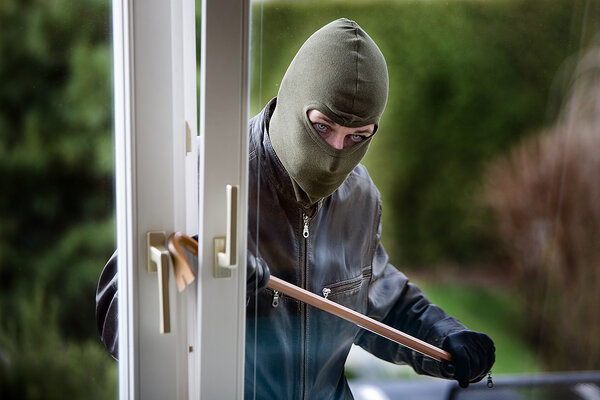
Standard perimeter hardware includes smooth rollers – pins that, when closed, slide into a counterpart screwed onto the window frame. However, such hardware can be forced open. Any prying tool can be relatively easily inserted between the frame and the window sash, and by lifting the window sash by 5–6 mm, the smooth roller is “dislodged” from its counterpart. This only needs to be done at the bottom and top of the sash, where the handle is, and the window is open. According to the timed footage in a television report, forcing it open took 6 seconds!
Most burglaries through patio and balcony doors
According to police statistics, thieves most frequently break into family homes through patio and balcony doors (40%), followed by windows (30%) and entrance doors (12%). The remainder consists of burglaries through basement windows and garage doors.
Solution – Security Hardware
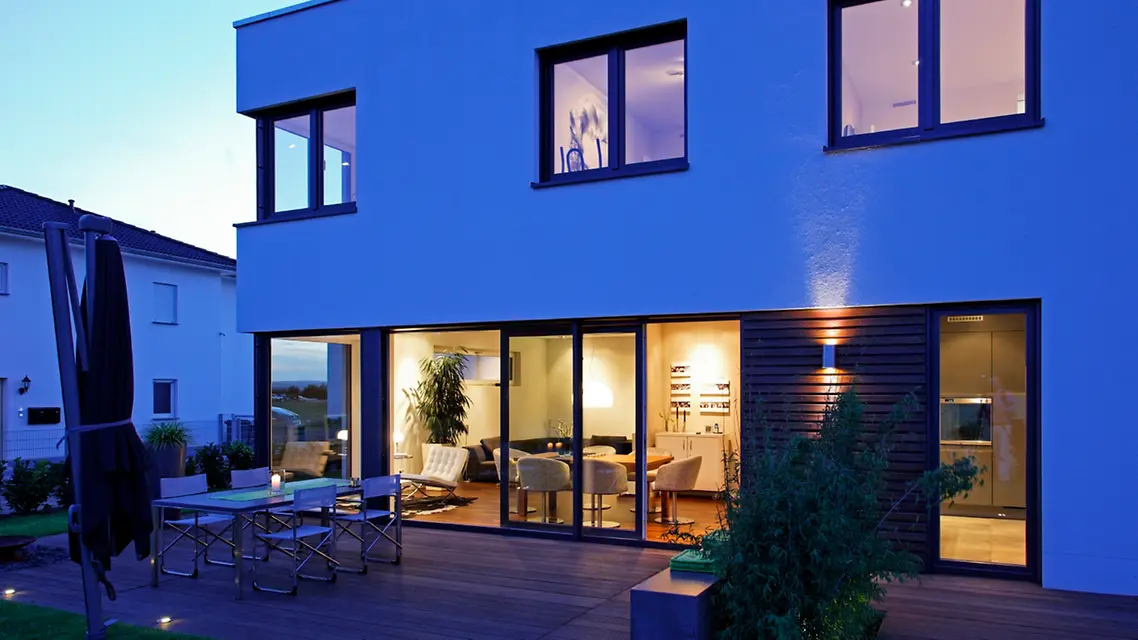
Security hardware uses mushroom-shaped pins instead of smooth rollers. When closed, these slide into a groove of a modified counterpart – a lock – where the head of the mushroom pin is fixed against being lifted. Therefore, immense force is required to pull the mushroom head out of the lock’s recess, which is screwed into the window frame. The greater the number of such points, the more resistant the window is to forced entry. Handles with a locking mechanism are also important – for example, handles with a button or lockable handles that prevent manipulation from the outside.
According to the timed footage in a television report, forcing it open took 6 seconds!
Security Classes – Security According to Standard
When we talk about standardized security, windows or doors are classified into security classes RC1 to RC6. The abbreviation RC is derived from Resistance Classes. Each class expresses the resistance of windows to an attempt at overcoming during a robbery or other violent entry. The binding standard here is EN 1627.
For classification into standardized security classes, we always assess the window as a whole. This means that for a given security class, we must use not only adequate window hardware containing security points on all closures, but also bonded security glazing and a security handle.
RC2 Class
In RC2 class, a window must withstand at least 3 minutes of physical violence from a thief using simple prying tools (e.g., a screwdriver). The window must have security glazing and be equipped with a window handle with a lock or a blocking button with a resistance of 100 Nm. A washer is inserted under the handle to prevent drilling.
RC3 Class
In RC3 class, a window can withstand at least 5 minutes against a thief using a crowbar at least 71 cm long, another screwdriver, a mechanical hand drill, and any other hand tools. A window in this class must have security glazing, a window handle with a lock or a blocking button with a resistance of 100 Nm, and a washer to prevent drilling.
uPVC windows for the Slovak and Czech markets are typically manufactured to a basic security level, RC1 class. However, in Austria and Germany, there is a growing demand for RC2 class.
Additional Security
For opening infills, security classes RC4, RC5, and RC6 are practically unfeasible. To achieve them, further additional security measures must be used. These include grilles, fixed roller shutters, external lockable blinds, shutters, etc.
Secure Entrance Doors: How to Choose Them?
Poor quality or unsecured doors can be opened by thieves in as little as 15 seconds. What to focus on when choosing secure entrance doors? It is important to emphasize that from a security perspective, investing in entrance doors is not enough; given the police statistics mentioned above, it is also crucial to consider the security of windows and patio doors.
Material – Plastic, Aluminum, or Steel?
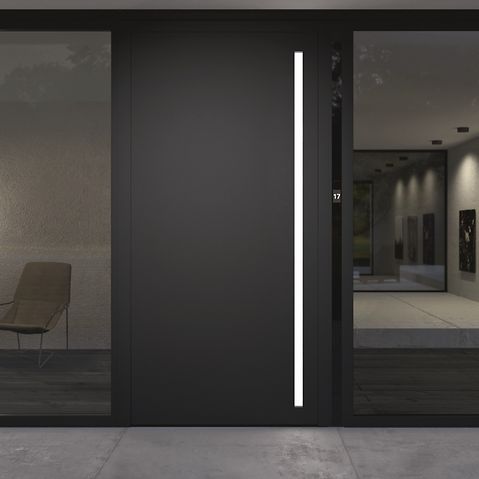
Plastic entrance doors are more affordable, but in their basic design, they have lower resistance to burglary. However, if we choose quality multi-point locks and security glazing, they can be as reliable as aluminum doors.
Aluminum entrance doors are stronger, more durable, and offer better protection against vandalism. In combination with quality security hardware, they are almost impenetrable.
Steel doors are extremely strong, but are often used more in industrial buildings and have weaker thermal performance parameters.
Security Hardware and Locking
- Multi-point locking – the more locking points, the harder it is to force the door open.
- Hinges with anti-jemmy protection
-
Cylinder insert with enhanced security
Fingerprint locks – a modern solution that eliminates the need for keys. They do not have a direct impact on security.
Security glazing – an important protection factor
Security glazing is a solution wherever increased glass resistance and other security properties of the glazing are required. By combining thermal toughening of glass (ESG) and using several layers of glass joined by polyvinyl butyral (VSG) security films, it is possible to achieve various levels of property protection and personal safety. There are glasses resistant to burglary (VSG) but also glasses that protect people from injury in case of breakage (ESG). For increased security, it is important to choose glass that is bonded into the frame structure.

As for the glass itself, the level of protection of laminated security glass can be improved, for example, by using a greater number of special PVB films. These create so-called interlayers within the glass.
Basic to medium level protection against vandalism is provided by classes P1A – P2A, which means that there must be at least 2 PVB films between two panes of glass.
An increased level of protection is represented by security glass classes P3A – P4A, where at least 4 PVB films are inserted between two panes of glass. Such glass can withstand less severe, manually directed attacks.
For the glass to sufficiently resist even premeditated attacks by an perpetrator, at least 6 PVB films must be inserted between two panes of glass. This brings the glass to a high level of protection, to class P5A.


PVC vs. Aluminum: Which Material is More Secure?
Plastic vs. Aluminum Windows and Doors – Security Comparison
The result? Aluminum windows and doors are generally more secure, but plastic windows can also be equally resistant if they have security hardware and security glazing.
Summary: How to Secure Your Home?
If you want a secure home, consider:
✅Security hardware for both windows and doors that resists forced entry.
✅Laminated security glass bonded into the frame, which thieves cannot easily overcome.
✅Cylinder inserts with enhanced security
✅Securing handles against external manipulation with a lock or button
Remember, home security is an investment that pays off. Quality windows and doors will not only protect you from thieves but also provide you with a sense of security and comfort.
Do you want advice on choosing security solutions for your home? Contact us and we will choose the best for you!

You might be interested in